Khao Sok Limestone Karst Wildlife: A Naturalist's Guide
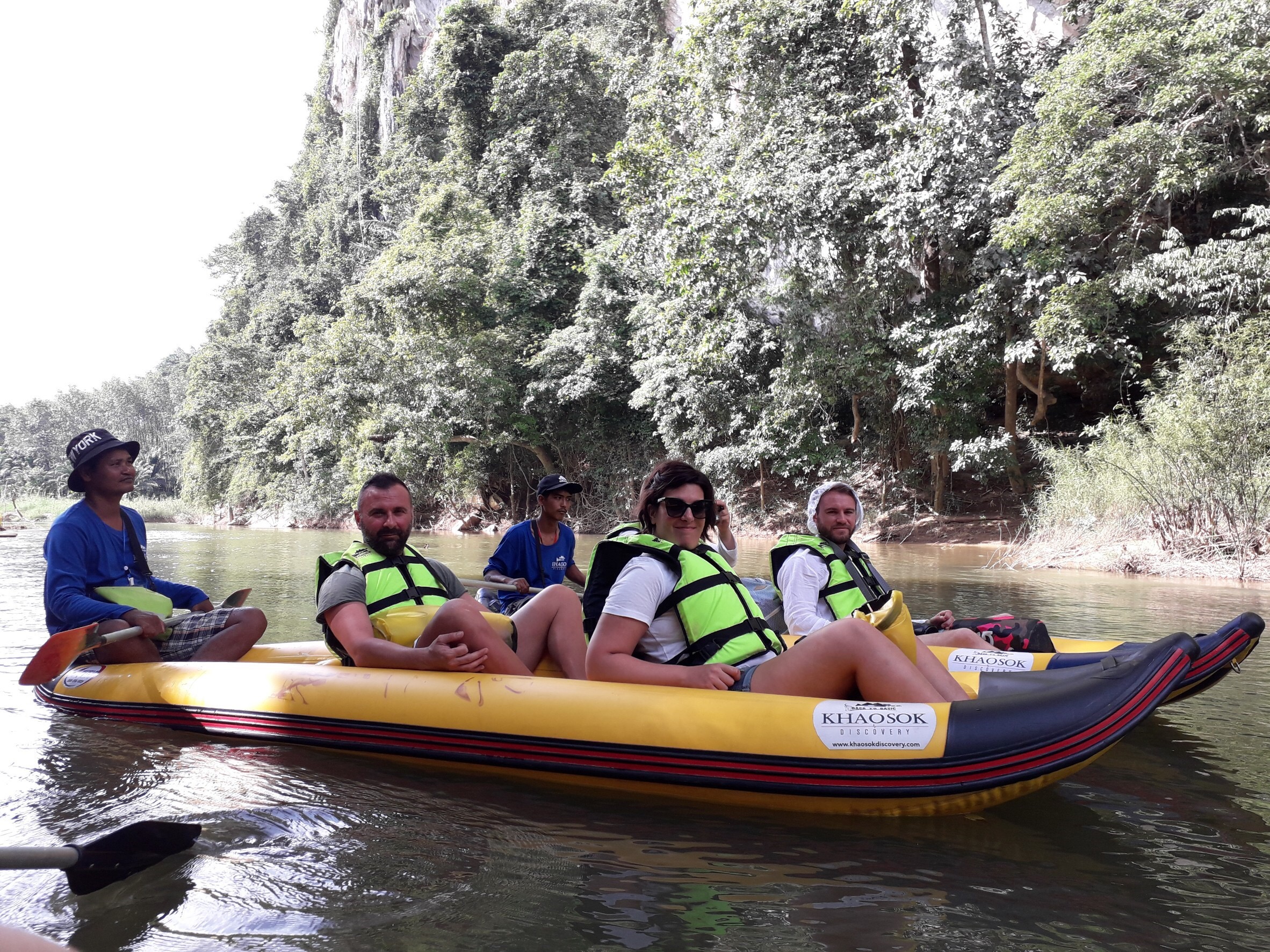
Most people paddle or trek past Khao Sok's limestone towers and see a backdrop. By the time you finish this guide, you will see a cliff face and know roughly what lives on it, why it lives only there, and what to look for at eye level instead of just up at the peak.
The towers look uniform from a boat. Up close, and read from base to crown, each one is a stack of different habitats stitched together by rock. A dark streak, a cave mouth, a mat of roots — each is a clue, not decoration.
This is a working guide, not a geology lesson. It is built to be used while you are actually moving past the cliffs, on a canoe or a jungle trail, with limited time to look.
Why Karst Towers Are Not Just Scenery
Vegetation Zonation: A Vertical Map of the Cliff
Cave Mouths and Mineral Streaks: Reading the Rock
Root Systems as Field Clues to Cliff Life
The Karst-Endemic Wildlife You're Actually Looking For
Summary
Why Karst Towers Are Not Just Scenery
Millions of Years of Isolation
Khao Sok's karst was shaped by water dissolving limestone over a very long span of time, leaving towers that stand apart from each other and from the surrounding forest floor. That separation matters more than the shape does. A population of snails or a colony of swiftlets on one tower can go generations without mixing with the tower next to it. Isolation like that is how you end up with species found on this cliff and nowhere else, which is what people mean when they say "karst-endemic".
What "Reading" a Cliff Actually Means
Reading a karst tower means matching what you see — a colour change in the rock, a change in the plants, a dark opening — to a reason it is there. It is the same skill as reading a riverbank for animal tracks, just applied to a vertical surface. For a comparison at ground level, the Sok River canoe spotting guide covers the same habit applied to the water's edge.
Vegetation Zonation: A Vertical Map of the Cliff
The Base Zone: Moisture-Loving Ferns and Shade
Near the waterline or the forest floor, the air stays damp and the light is filtered by the canopy above. This is where you find broad-leafed ferns and mosses clinging directly to wet rock. If a section of cliff looks green and soft rather than grey and bare, you are looking at the base zone, and it usually means water is close, whether as a stream, seepage, or the lake itself.
The Mid Zone: Dwarfed Trees and Orchids
Further up, trees rooted in thin soil pockets grow smaller than their lowland relatives — not a different species necessarily, just starved of soil depth. This zone is also where you are most likely to spot orchids growing directly on rock rather than in soil, taking moisture from the air rather than from roots in the ground. They flower on their own schedule, so whether you see one in bloom on a given day is down to timing you cannot control.
The Crown: Exposed Growth and Wind-Shaped Canopy
At the very top, plants deal with full sun, wind, and almost no soil. Growth here tends to be sparse and low, sometimes twisted from wind exposure. It is the least hospitable zone and, correspondingly, the one with the fewest species — useful to know if you are scanning for wildlife and wondering where to actually spend your attention.
Cave Mouths and Mineral Streaks: Reading the Rock
Dark Streaks and What They Tell You About Water
Long vertical streaks down a cliff face are usually mineral deposits left by water running down the same path for a long time. They mark where water reliably moves after rain, which in turn tells you where moisture-dependent plants and animals are likely to cluster nearby, even in a dry spell.
Cave Mouths as Swiftlet Real Estate
A dark opening partway up a tower is not automatically a cave worth watching, but a cave mouth with a scatter of white droppings below it usually is. That staining is a sign of a nesting colony above, most often cave swiftlets. You are more likely to see birds moving in and out at dawn or dusk, when they leave or return to feed; midday visits often mean a quiet, seemingly empty opening.
Root Systems as Field Clues to Cliff Life
Strangler Roots and the Trees They Outlive
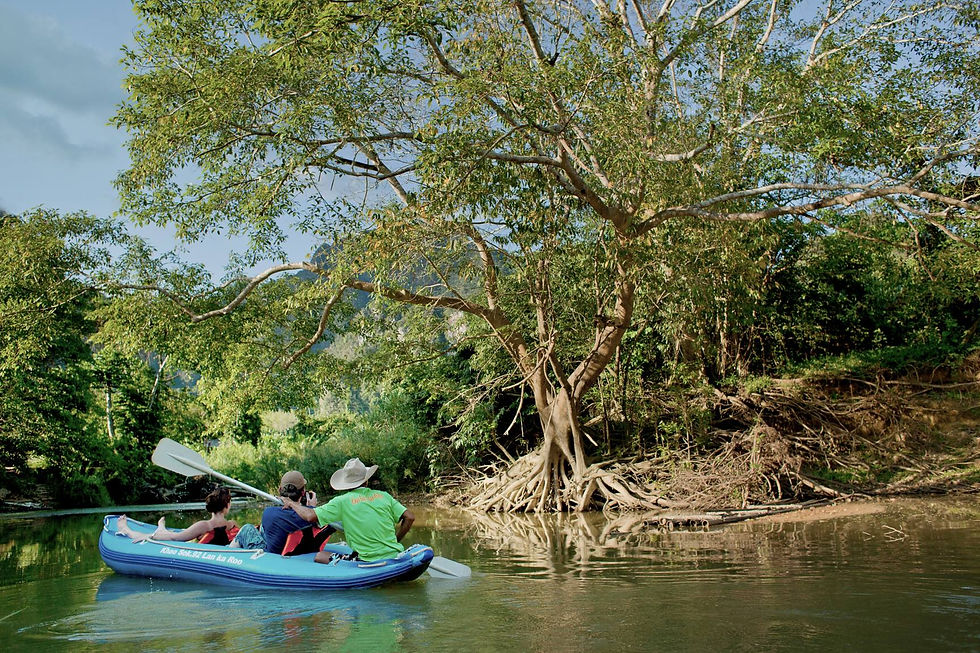
Some of the root networks draped over karst faces started as a fig seed dropped by a bird into a crevice. The roots grow down and around whatever the seed landed near, eventually outlasting the original support. A thick, netted root system with no obvious trunk of its own at the centre is usually this process, well advanced.
Root Mats as Snail Habitat
Where roots trap leaf litter and moisture against the rock, you get a small, stable pocket of humidity that outlasts the dry season around it. These pockets are where karst-adapted snails tend to be found, since their shells and bodies are built for a narrow, damp range of conditions they cannot survive outside of. If a guide points out a cluster of small shells tucked into a root mat, that is why they are exactly there and not on the open rock nearby.
The Karst-Endemic Wildlife You're Actually Looking For
Limestone Langurs
Limestone langurs favour cliff ledges and the vegetation pockets described above, using the rock for both cover and escape routes that ground-based predators cannot follow. Their conservation status varies by exact population, and cliff-dwelling primates like these are generally considered vulnerable to habitat disturbance, according to the IUCN Red List. Spotting one is a matter of scanning ledges at the mid and crown zones rather than the base, and it is not guaranteed on any single pass.
Cave Swiftlets
Beyond the staining at a cave mouth, swiftlets are best identified by fast, direct flight in and out of an opening, usually in short bursts rather than the circling you'd see from other birds. A dedicated after-dark outing gives a different view of this activity; the night safari guide covers what changes once the light goes.
Karst-Adapted Snails and Orchids
These are the two groups most tied to a single tower or even a single face of that tower. Neither moves or grows fast enough to recolonise a damaged section quickly, which is part of why guides ask visitors not to touch root mats or pry at rock. For a broader view of what else shares this forest with them, the wildlife encounters overview is a useful next read.
Summary
A karst tower is a stack of zones, not a single surface: damp ferns at the base, dwarfed trees and orchids in the middle, bare exposed growth at the crown. Dark streaks mark water paths, stained cave mouths mark swiftlet colonies, and thick root mats mark the humid pockets where snails hold on. None of it is visible from far away or from a single glance — it takes slowing down and looking at one section of rock at a time. For a fuller sense of how this fits into a day in the park, see the guide to things to do in Khao Sok.
None of this is guaranteed on a single trip. Langurs may stay high and out of sight, orchids may be between flowerings, swiftlets may already be out feeding when you pass. What you can control is knowing where to look and why, which turns a passing cliff into something worth stopping the boat for.
Read the previous article: Khao Sok oldest rainforest older than Amazon: A Guide
Let's Plan Your Khao Sok Journey
Have questions about timing, routes, or what to bring for spotting karst wildlife up close? Talk to someone who knows the cliffs.


Comments