Khao Sok Gibbon and Hornbill Sounds: A Field Guide
Before you see anything in Khao Sok, you hear it. The forest here is thick enough that a hornbill can pass thirty metres overhead and stay invisible, and gibbons call from ridgelines you will never walk. Most visitors spend their first morning looking up at leaves, waiting for a shape that never appears.
This guide teaches you the two sounds worth knowing before you set out: the gibbon's dawn call and the hornbill's wingbeat. By the end you will be able to tell which one you are hearing, roughly how far it is, and where to stand so the sound reaches you clearly.
None of this guarantees a sighting. It gets you close enough, often enough, that a sighting becomes possible.
Why sound comes first in Khao Sok
The gibbon call: what dawn actually sounds like
The hornbill wingbeat: hearing size before you feel it
Best listening posts and timing
Which trek or lake tour gives the best acoustic encounters
Summary
Why sound comes first in Khao Sok
Khao Sok is one of the oldest evergreen rainforests in the world, and the canopy here runs three layers deep in places. Sightlines close within a few metres of the trail. Guides who work this park every week will tell you, as a matter of routine rather than opinion, that they identify most animals by ear first and confirm by eye second, if at all.
What this means for a first-time visitor
If you come expecting to spot animals the way you might on an open savanna, the density will frustrate you. Reset the goal: learn the two or three sounds that matter, and let your ears do the first pass. For a wider sense of what else moves through this forest, the wildlife encounters guide covers the animals beyond these two.
The gibbon call: what dawn actually sounds like
White-handed gibbons call in the first two hours after sunrise, most reliably on clear mornings. The sound is a rising, looping whoop that builds over ten to twenty seconds and often gets answered by a second gibbon further off. It is loud enough to carry a kilometre through open canopy, less in dense understorey.
How to tell it from other calls
Macaques bark in short, single notes. Gibbons build. If you hear a sound climbing in pitch and length before it drops off, that is almost certainly a gibbon, not a monkey.
Why mornings, and why it is not guaranteed
Gibbon calling is a territorial and pair-bonding behaviour, and it tapers off on overcast or rainy mornings, according to guides who track this daily. A quiet dawn does not mean no gibbons; it means the conditions did not prompt a call that day.
The hornbill wingbeat: hearing size before you feel it
Great hornbills and wreathed hornbills both fly through the Khao Sok canopy, and both produce a distinct, heavy wooshing sound with each wingbeat, caused by the shape of their primary feathers. You will often hear a hornbill pass overhead a full two or three seconds before you catch any movement in the leaves.
Reading the sound
A slow, deep woosh-woosh-woosh at a steady rhythm is a hornbill in direct flight, usually moving between two fruiting trees. A faster, choppier beat suggests a shorter hop, often a bird settling rather than travelling far. If you want to build a broader ear for the park's birdlife beyond hornbills, the Khao Sok birdwatching adventure page goes into more species.
Where hornbills tend to be loudest
Sound carries furthest over open water and along river corridors, where there is no understorey to absorb it. This is one reason canoe routes along the Sok River produce some of the clearest hornbill encounters in the park; the riverbank spotting guide covers what else to watch for from the water.
Best listening posts and timing
Not every spot in the park gives you the same acoustic conditions. Dense jungle absorbs sound quickly; open water and ridgelines carry it further.
Dawn on a ridge or clearing
The first ninety minutes after sunrise is the single best window for gibbon calls, according to local guides who work this timing daily. A ridge trail or a break in the canopy gives you the longest listening range.
Mid-morning on the water
By mid to late morning, gibbon activity usually drops off, but hornbills continue moving between feeding trees, and a canoe or boat on open water puts you in a good position to hear the wingbeats clearly, since there is nothing overhead to muffle the sound.
Dusk, for a different set of calls
Evenings bring a different soundscape, dominated by insects and, occasionally, nocturnal mammals. If you want to extend the day into that window, the night safari experience covers what to expect after dark.
Which trek or lake tour gives the best acoustic encounters
Different routes through the park put you in different acoustic conditions, and it is worth matching the route to what you actually want to hear.
For gibbon calls
An early-start jungle trek that puts you on a ridge or in a clearing before sunrise gives the best chance at a clear, close call. Guides who plan around this timing, rather than a fixed departure hour, tend to get better results.
For hornbill wingbeats
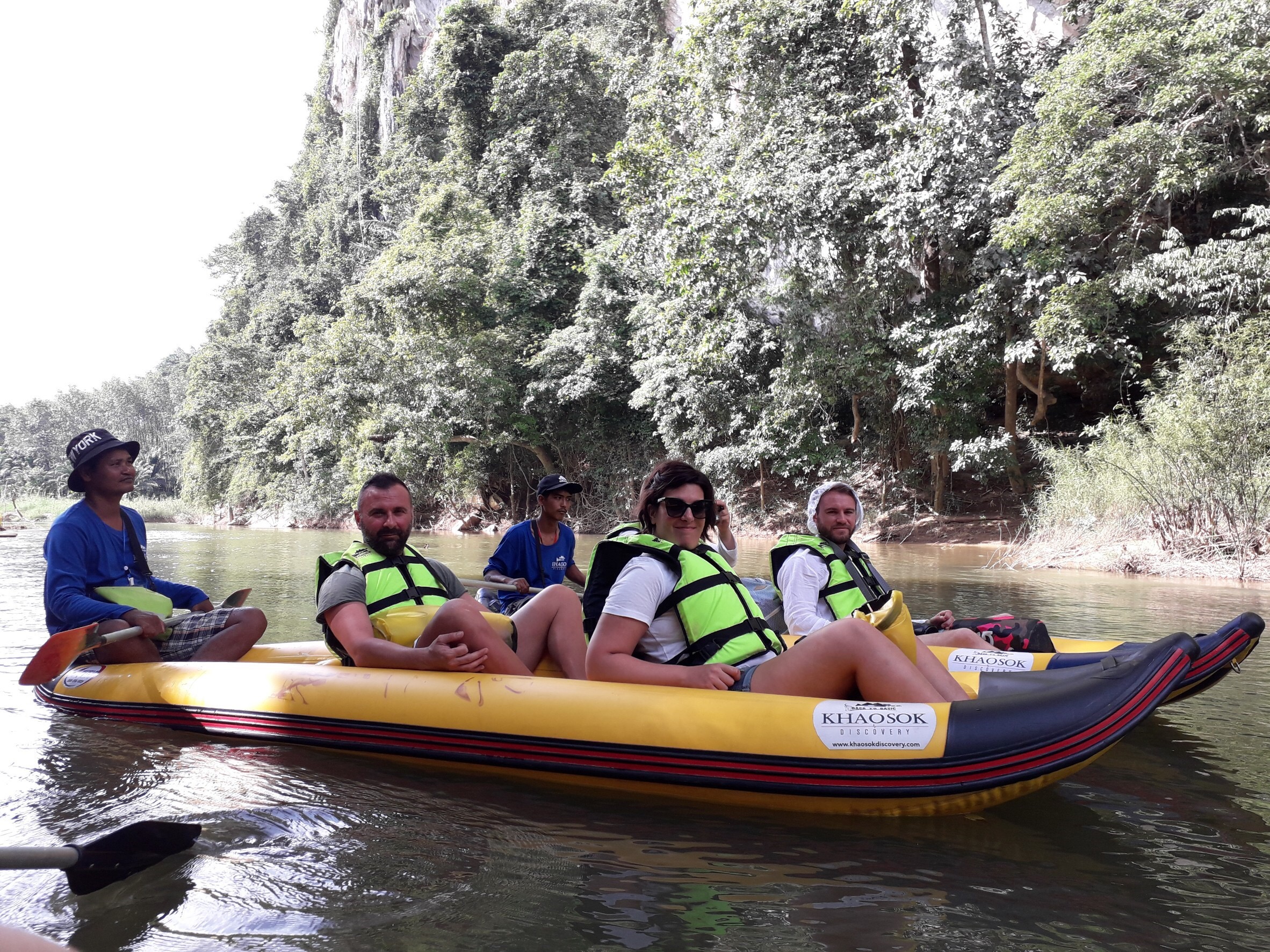
A river canoe or a lake-adjacent walk during mid-morning tends to deliver more hornbill passes than a dense forest trail, simply because the sound travels further over water. For a wider view of how these routes fit together, the guide to lake tours and jungle adventures lays out the full set of options.
For background on the region's biodiversity more broadly, the Thailand Department of National Parks, Wildlife and Plant Conservation maintains records on the species protected within parks like Khao Sok.
Summary
Khao Sok rewards ears before eyes. Gibbons call loudest in the first ninety minutes after a clear sunrise, from ridgelines and clearings. Hornbills give themselves away with a heavy wingbeat you can hear seconds before you see the bird, most clearly over open water. Match your route and your timing to which sound you want, and treat a quiet morning as a condition, not a failure.
Nothing here is a guarantee. Weather, season and simple luck all play a part, and any guide who tells you otherwise is overselling it.
Read the previous article: Khao Sok oldest rainforest older than Amazon: A Guide
Let's Plan Your Khao Sok Journey
Tell us when you want to hear the gibbons and hornbills for yourself, and we'll match you with the right trek or river route.


Comments