Sok River Canoe Wildlife: A Riverbank Spotting Guide
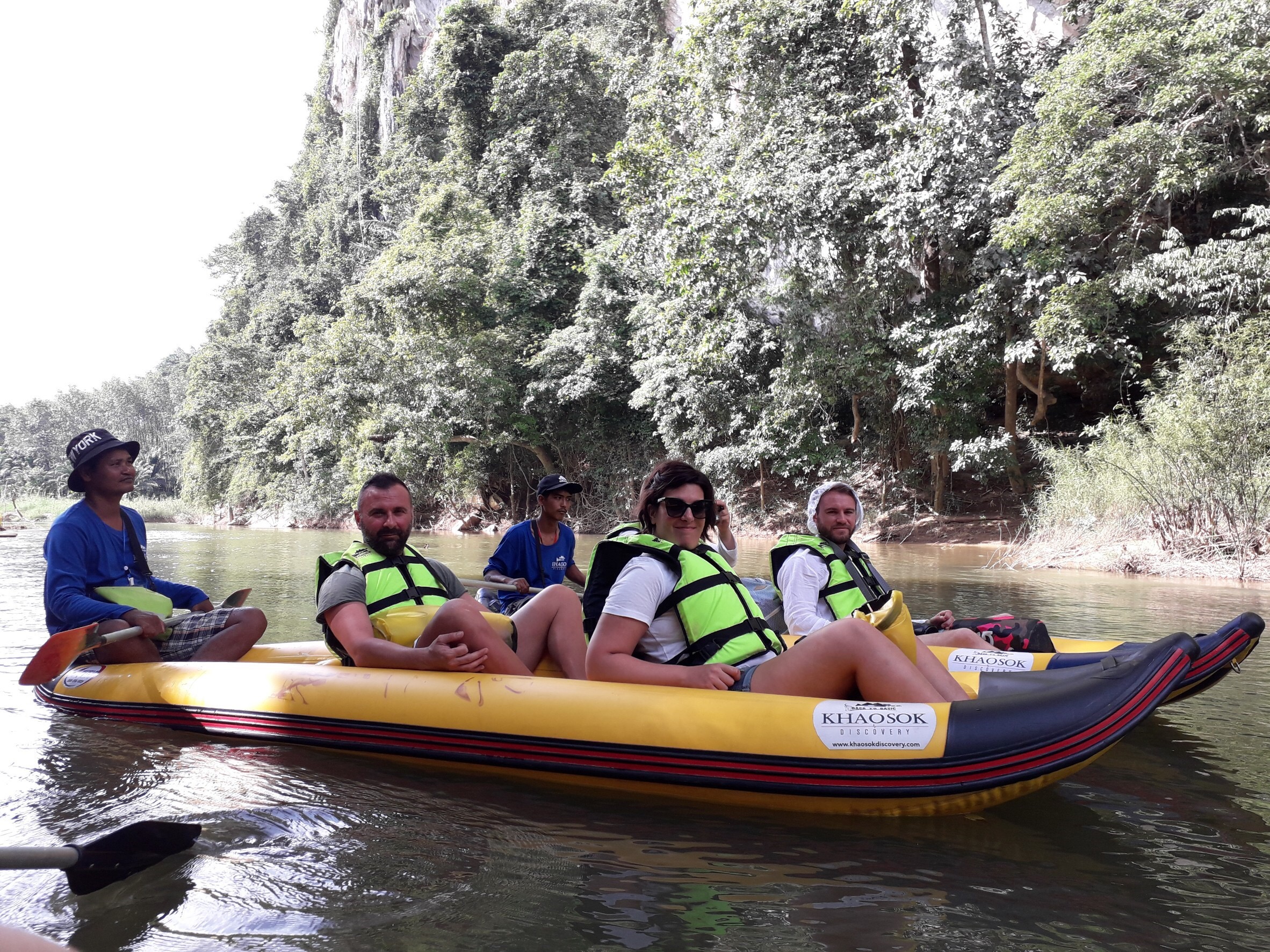
Most Khao Sok trips move fast: a longtail to the lake, a jungle trek, a night safari with a spotlight. The canoe on the Sok River does the opposite. You sit low, close to the water, and the guide paddles just fast enough to hold position against the current. That low, slow angle is what puts you at eye level with a kingfisher on a low branch or a monitor lizard sliding off a rock, instead of watching it disappear from the deck of a bigger boat.
This guide covers what actually lives on the Sok River's banks, when you are most likely to see it, and how to paddle so you do not scare it off before you do.
By the end you will know which stretch of river to ask for, what to bring, and how a two-hour canoe trip differs from the wildlife you already saw on a birdwatching trip or a night safari.
Why the canoe sees what the longtail misses
Riverbank wildlife to watch for
Streamside plants worth knowing
How to paddle without scaring everything off
When to go
Summary
Why the canoe sees what the longtail misses
A longtail's engine pushes a wake and a noise ahead of it. Anything on the bank hears it coming and is gone before you round the bend. A canoe on the Sok River moves at walking pace and makes almost no sound beyond the paddle dipping in and out. That difference is not cosmetic — it is the reason canoe trips report otter and lizard sightings that engine-powered tours rarely get.
The stretch that matters
The river bends through overhanging vegetation for most of its canoeable length, and the banks alternate between exposed rock, low mud shelves and thick root systems. Wildlife uses all three, depending on the hour, so a single straight paddle rarely covers everything — ask your guide to hug the bank rather than take the centre line.
Riverbank wildlife to watch for
Smooth-coated otters
Otters here are more often heard than seen — a splash, then a V-shaped wake moving upstream. If you do get a clear look, it is usually early morning, when the family group is still working the bank for fish before the heat sets in. Whether you see one on a given morning is mostly luck; guides can tell you where they were last spotted, not where they will be.
Water monitor lizards
Monitors are the easiest riverbank animal to actually see, because they bask in the open on rocks and fallen trunks rather than hiding in foliage. A monitor that has not noticed you will hold still; one that has will drop into the water with a heavy splash. Neither reaction is dangerous to a canoe — they want distance, not confrontation.
Kingfishers and other river birds
The stretch is a working hunting ground for several kingfisher species, which perch low over the water on exposed branches and dive straight down for small fish. Because they hunt from a fixed perch rather than flying continuously, a slow-moving canoe can often get close before the bird decides to relocate. If birds are the main draw for you, a dedicated birdwatching trip covers species further from the water as well.
Streamside plants worth knowing
Screw pines and root tangles
The exposed root systems along the bank belong mostly to screw pines and river-edge fig trees, and they do double duty as fish and otter shelter below the waterline. Guides can point these out, but they rarely get mentioned on jungle-trek routes because you only see the root structure properly from water level.
Flowering vines after rain
After rain, several flowering vine species along the bank open within a day or two, which is a detail worth asking your guide about if you are paddling in the wetter months — the display does not last, and whether you catch it depends on timing rather than skill.
How to paddle without scaring everything off
Noise and sudden movement are the two things that end a sighting before it starts. Keep paddle strokes shallow and even rather than deep and splashy, and resist the urge to point or speak the moment you spot something — let the guide see it too, then react quietly. Camera users should pre-set their settings before entering a likely stretch, since fumbling with a phone is usually what costs the shot.
When to go
Early morning gives the best light for photos and the best chance at otters, since the group is normally still feeding then. Later morning and afternoon paddles see more monitor lizards, since they need the sun to warm up before basking. Rain changes river level and current speed, which can shorten or reroute a trip with little notice — that part depends on the season and is outside anyone's control.
Summary
A canoe trip on the Sok River is a different kind of Khao Sok wildlife encounter than a lake tour or night safari: slower, quieter, and focused on what lives right at the waterline rather than deeper in the jungle. Otters and birds are a matter of timing and luck; monitor lizards and the riverside plants are close to a sure thing on almost any paddle. For the full range of ways to see Khao Sok's wildlife, see this overview of things to do in the park, and for species information beyond what a guide covers on the water, the Thailand Department of National Parks, Wildlife and Plant Conservation publishes species lists for the park.
Read the previous article: Khao Sok oldest rainforest older than Amazon: A Guide
Let's Plan Your Khao Sok Journey
Tell us when you're arriving and we'll help you fit a slow-paddle canoe trip around the rest of your Khao Sok itinerary.


Comments