Khao Sok oldest rainforest older than Amazon: A Guide
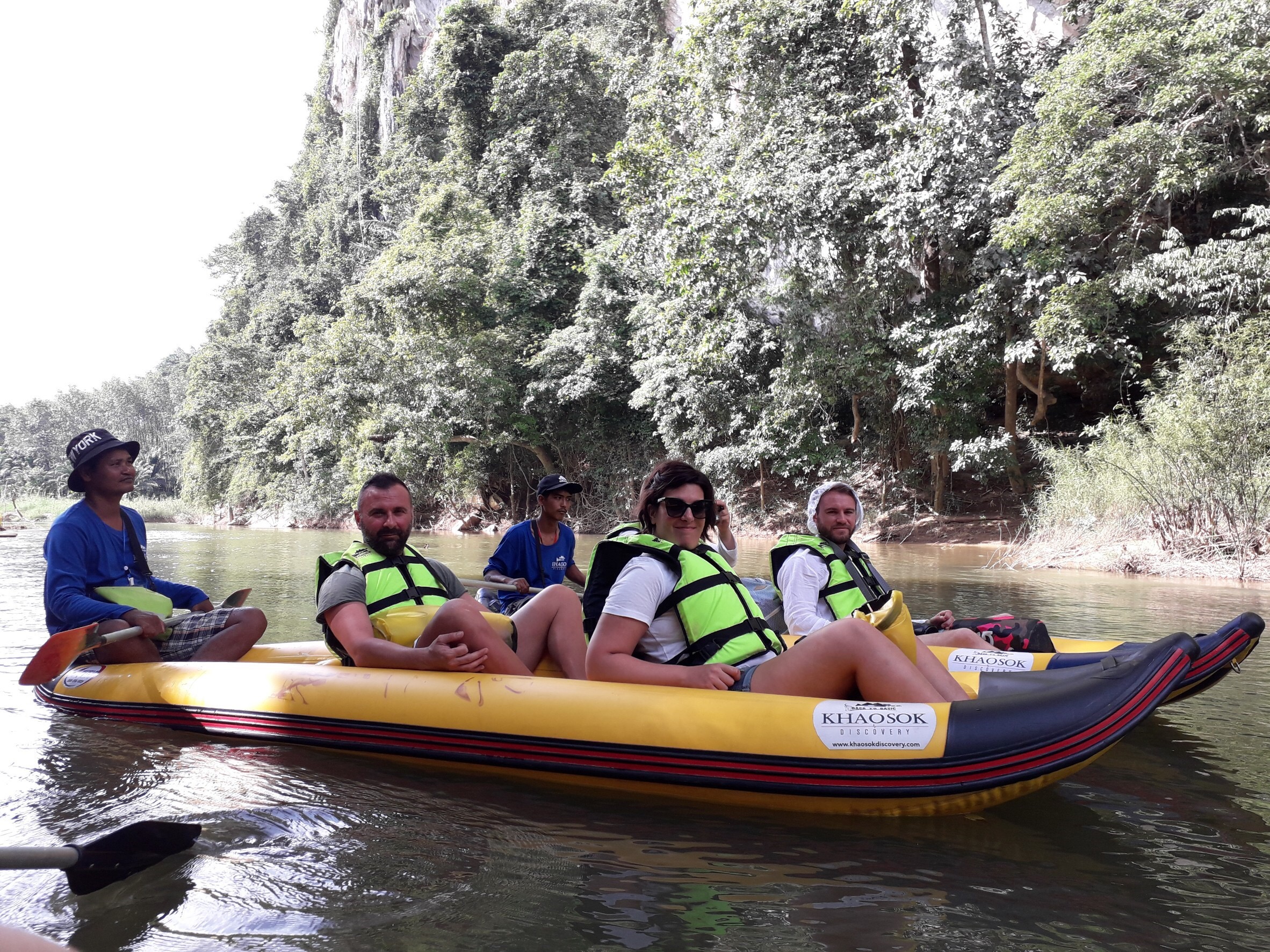
Updated: Sep 13
You can walk into a rainforest that was already old when the dinosaurs were still around, and most people who visit Khao Sok never find out. The limestone karsts here started forming around 160 million years ago, in a shallow sea that later buckled upward into the jagged towers you see from the lake. The Amazon, by comparison, is a newcomer — its current rainforest ecosystem is closer to 55 million years old.
This is not a list of things to book. It's a way to plan the trip so that the days you spend here actually connect to what makes this specific place different: not the zipline, not the elephant sanctuary next door, but the fact that some of the plants rooted along the trail have relatives in the fossil record from before flowering plants existed anywhere else on Earth.
By the end of this, you'll have a rough shape for a multi-day trip that reads the forest instead of just moving through it, and you'll know what to actually look for when you're standing in front of it.
What "160 Million Years" Actually Means When You Arrive
Reading the Limestone: A Trip Planned Around Rock, Not Route
The Living Fossils: What to Look For, Day by Day
Building a Slow Itinerary Around Deep Time
What This Kind of Trip Asks of You
Summary
What "160 Million Years" Actually Means When You Arrive
The number gets thrown around, so it's worth being specific about what it refers to. The limestone that forms Khao Sok's karst towers was laid down as marine sediment in the Jurassic period, then pushed upward by tectonic pressure over tens of millions of years. That's the rock. The forest itself is younger than the rock it grows on, but botanists studying the region point to plant lineages here — certain fig species, some of the palms — with ancestors that predate the split of the supercontinent Gondwana. That's a judgement made by researchers comparing fossil pollen records, not something you can verify by eye, but it's the reasoning behind the "older than the Amazon" claim.
What you can verify by eye is the shape of the karsts themselves: near-vertical, often overhanging, cut by rain and river over a timescale that makes the forest floor beneath them look almost recent.
Why This Matters for How You Plan
If you come expecting a checklist of activities, the geology is just scenery. If you come knowing the rock is the oldest part of the trip, the itinerary changes — you start choosing viewpoints, boat routes and campsites based on what they let you see of the karst formation process, not just what's photogenic.
Reading the Limestone: A Trip Planned Around Rock, Not Route
Most guides here are booked as "the lake day" or "the trekking day." A deep-time version of the same days looks at where the limestone is exposed, eroded, or split, and plans around that instead.
The Cheow Lan Lake Approach
Cheow Lan Lake didn't exist until a dam was built in 1982; the karst towers rising from the water were hilltops before the valley flooded. Floating there now, you're seeing 160-million-year-old limestone from an angle that didn't exist forty years ago — a strange collision of deep and recent time in the same view.
Cave Systems as a Timeline You Can Walk Into
The limestone caves scattered through the park — shaped by water dissolving rock over thousands of years — are where the erosion process is easiest to see up close: stalactites, water-cut channels, and layered rock that reads almost like tree rings if you look at it that way. A slow visit means one cave, properly, rather than several caves rushed.
The Living Fossils: What to Look For, Day by Day
"Living fossil" gets overused, but a few things in Khao Sok earn it more than most.
Rafflesia and the Forest Floor
The rafflesia flower — the world's largest single bloom, and a parasitic plant with no leaves or stem of its own — belongs to a lineage botanists trace back tens of millions of years. It only blooms for a few days at a time, and whether you see one at all depends on season and luck; local guides generally know if one is currently open, so it's worth asking on arrival rather than assuming you'll find one.
The Understory Palms
Look at the palm species growing in deep shade under the canopy rather than the ones near the trailheads. Several belong to genera with a fossil record stretching back well before flowering plants diversified into what most tropical forests look like today.
What's Actually Visible vs. What's Inferred
Be honest with yourself about this distinction while you're there: you can see the rock, the shape of the caves, the palms and the flowers. You cannot see 160 million years. That number comes from geological dating done by researchers, not from anything the eye confirms on its own — which doesn't make it less true, just worth remembering when a guide states it as though it's visible fact.
Building a Slow Itinerary Around Deep Time
A trip built around this angle tends to need fewer stops covered more slowly, rather than the reverse.
Day One: Orientation Without Activity
Spend the first day near the visitor center and lowland trails without booking an activity block. This is where you get context — what's karst, what's more recent alluvial forest, what's been replanted after past logging — before you're moving through it at pace.
Day Two: One Cave, One Lake Crossing
Rather than combining several activities into one day, pick a single cave system and a single lake crossing, timed so you're not rushing between them. If you're arranging the logistics yourself, the guide on understanding Khao Sok tour costs is useful for working out what a slower, single-focus day actually costs compared to a packed one.
Day Three Onward: Following What You Noticed
By day three you'll usually have noticed something specific — a rock formation, a plant, a particular stretch of river — worth going back to rather than moving on from. Build the rest of the trip around that instead of a fixed checklist.
What This Kind of Trip Asks of You
This isn't a lower-effort version of a Khao Sok trip. It asks you to slow down in a place set up, commercially, to keep you moving between activities. It also asks you to sit with some uncertainty — the exact age of a given plant lineage, whether a rafflesia will be blooming, whether the guide's explanation of the karst formation is simplified for the group. None of that undermines the trip; it's part of what makes a 160-million-year-old forest a strange thing to try to fit into three days.
If you'd rather have someone experienced structure this for you rather than piece it together from separate bookings, the guide to booking a Khao Sok tour online covers how to set that up without losing the slower pacing this kind of trip depends on.
For the geological dating itself, the research is documented by Thailand's own conservation authorities — the Department of National Parks, Wildlife and Plant Conservation maintains records on the park's formation and ecology if you want the primary source rather than a guide's summary.
Summary
Khao Sok's limestone karsts formed roughly 160 million years ago, and some of the plant lineages growing among them are older than the modern Amazon rainforest. A trip planned around that fact looks different from a standard activity list: fewer stops, more time at each one, and an itinerary built around where the rock and the oldest plant lineages are actually visible rather than around a fixed schedule of excursions. What you can verify by eye — the shape of the karsts, the caves, the plants — is worth separating from what's inferred by researchers, but both are part of what makes the place worth the slower pace.
Read the previous article: "Ready for a jungle adventure"🥰🌺
Let's Plan Your Khao Sok Journey
Tell us how much time you have and what you want to see, and we'll help you build a trip around it.


Comments